
Cosmetic treatment
Teeth Whitening in Jeddah — In-Clinic or Supervised Home Trays
Brighter shades, safely and under consultant supervision: an exam identifies the cause of the discoloration first, then an in-clinic session or custom home trays — with approved materials at a concentration that suits your teeth.
Teeth whitening lightens the natural shade of your teeth; it does not change fillings, crowns or veneers. If you are looking for teeth whitening in Jeddah, Dr. Abdullah Bokhary, Esthetic & Restorative Dentistry Consultant, offers it at Orchid Dental in Al Khalidiyyah, in the clinic or with custom home trays, and the exam decides which suits your teeth.
Whitening with us does not start with the gel; it starts with an exam. We first make sure the gums and teeth are healthy, then identify the cause of the discoloration: surface staining from coffee, tea and smoking? A natural change in the tooth's shade with age? Or internal discoloration with a different cause? The type of staining decides the method — and sometimes it shows that whitening is not the right answer at all.
We use approved whitening materials at a concentration chosen for your case, under supervision from the first step to the follow-up. Done this way, whitening does not cause meaningful harm to healthy enamel. What harms it is unknown mixtures, over-repeating without follow-up, and putting whitening gel on teeth with decay or inflamed gums.
We offer two routes: a session in the clinic for a faster result, and home trays made to the shape of your teeth for a gradual result at a pace you control. We often combine the two: the in-clinic session gives the first lift, and the trays settle and complete the result.
On this page we explain the difference between the two routes, what the light or laser actually does, who whitening does not suit and what we do instead, and how we manage sensitivity and keep the result. If a question remains, message us on WhatsApp.
When is it the right choice?
- Surface stains from coffee, tea and smoking
- A yellow or dark shade with healthy teeth and gums
- An upcoming occasion that needs a fast result
- Evening out the shade before other cosmetic work such as veneers or crowns
- A single dark tooth after a root canal — which has its own internal whitening, depending on the case
- Not yet: with decay, gum inflammation or wear that exposes the dentin — we treat the cause first, then reassess whitening
- Not suitable: deep internal discoloration, or front fillings and crowns whose shade whitening cannot change — here we explain alternatives such as veneers or renewing the restoration
- Not now: during pregnancy and breastfeeding we postpone as a precaution, and for those under 18 we usually prefer to wait
The journey, step by step
- Clinical exam of the teeth and gums, and diagnosis of the cause and type of staining
- Recording your current shade and photographing it, so the result can be compared objectively
- Cleaning and scaling if needed, and treating any decay or inflammation before whitening
- Isolating and protecting the gums with a barrier before the gel is applied in the clinic
- The in-clinic session, or impressions and fabrication of your home trays with clear instructions for use
- A sensitivity plan: the right concentration, desensitizing agents before and after, and split sessions when needed
- Follow-up after whitening to compare the shade and discuss care and top-ups
Types of whitening: in the clinic, with home trays, or both
The gel is the same in both routes: an approved whitening gel at a concentration matched to the method and your case. What differs is where it happens, how closely it is supervised, and how fast the result appears.
| Comparison | In the clinic | Home trays | Combined |
|---|---|---|---|
| Where | Dental chair | At home, in custom trays | Clinic session, then home |
| Duration | Usually one session | Days to weeks, by concentration | One session, then a shorter tray phase |
| Speed of result | The fastest to appear | Gradual | A fast start, completed gradually |
| Sensitivity | More noticeable, but short-lived | Usually milder, spread over days | Varies with concentration and spacing |
| Supervision | Direct, throughout | Written instructions and follow-up | Both |
| Usually suits | An upcoming occasion, or a one-visit preference | Gradual control, or sensitive teeth | A fast start and a more stable result |
And the light or laser? The gel does the whitening, not the device. Light may speed up the reaction during the session, but its effect on the final result — depending on the case — is smaller than the name suggests, and no substitute for the right concentration, good gum isolation and a correct diagnosis. So we call it in-clinic whitening, and use light activation only when it adds something to your case.
Which route suits you? We decide together after the exam — message us on WhatsApp.
Who whitening does not suit — why — and what we do instead
Whitening changes the shade of natural tooth only. Composite fillings, crowns and veneers keep theirs, so on front teeth they can end up looking darker than their neighbors. So the order matters: whiten first, let the shade settle, then renew the restoration to match. If you are planning veneers or front crowns, whitening comes before them, not after.
Internal discoloration responds partially or not at all: staining from certain childhood medicines, mottling from excess fluoride, and a tooth darkened by an injury or a root canal. A single root-treated tooth has its own internal whitening, depending on the case. Deep, widespread discoloration may call for veneers or crowns when whitening is not enough — and we say so plainly before you begin, not after a session that did not deliver.
Then there are cases we postpone rather than refuse: inflamed gums, decay or wear exposing the dentin (we treat, then reassess); roots exposed by gum recession or visible enamel cracks (irritation can outweigh benefit — we treat the cause first); severe sensitivity (desensitizing agents first, and a lower concentration); pregnancy and breastfeeding (postponed as a precaution); and under-18s (the pulp is still large and the teeth still maturing, so we usually prefer to wait). Not sure where your case falls? Message us on WhatsApp for an initial opinion — the exam settles it.
Sensitivity, aftercare, and how long the result lasts
Temporary sensitivity is whitening's most common companion: a passing twinge or sensitivity to cold during or shortly after the session, usually settling within days. We reduce it with the right concentration, good gum isolation, desensitizing agents before and after, and split sessions when needed. If your teeth are already sensitive, we say so from the start and adapt the plan.
After whitening, teeth pick up color more easily for a short while. In the first days, cut back on coffee, tea, dark drinks and smoking, use a desensitizing toothpaste if needed, and skip extra whitening products from the pharmacy. If you use trays, keep to the time and concentration written for you — more is not faster. Then back to normal habits and care: brushing twice a day, flossing, and regular professional cleaning.
How long does it last? We do not promise a set period — it depends more on you than on us: coffee, tea and smoking bring staining back faster; daily care and regular cleaning extend it. A short top-up — or a few days with your trays — usually restores the shade without starting over. The final shade also differs from person to person, so we promise no number of shades before seeing your teeth. If sensitivity lingers, or you want a maintenance plan that fits your day, message us on WhatsApp.

Orchid Dental
Dr. Abdullah Bokhary
Before any whitening, an exam identifies the cause of the discoloration first. An in-clinic session for a faster result, or supervised home trays — with certified materials at a concentration that suits your teeth.
Esthetic & Restorative Dentistry Consultant
Advanced Education in Esthetic & Operative Dentistry (AEEOD) · Master of Science in Dental Research (MSc) · Certificate of Advanced Graduate Study in Dental Public Health (CAGS) · Fellowship of the Royal College of Dentists of Canada — Dental Public Health (FRCDC) · Bachelor of Dental Medicine & Surgery (BDS)
Meet the doctor → Ask on WhatsApp →Before & after
Real cases from the clinic
 Before
After
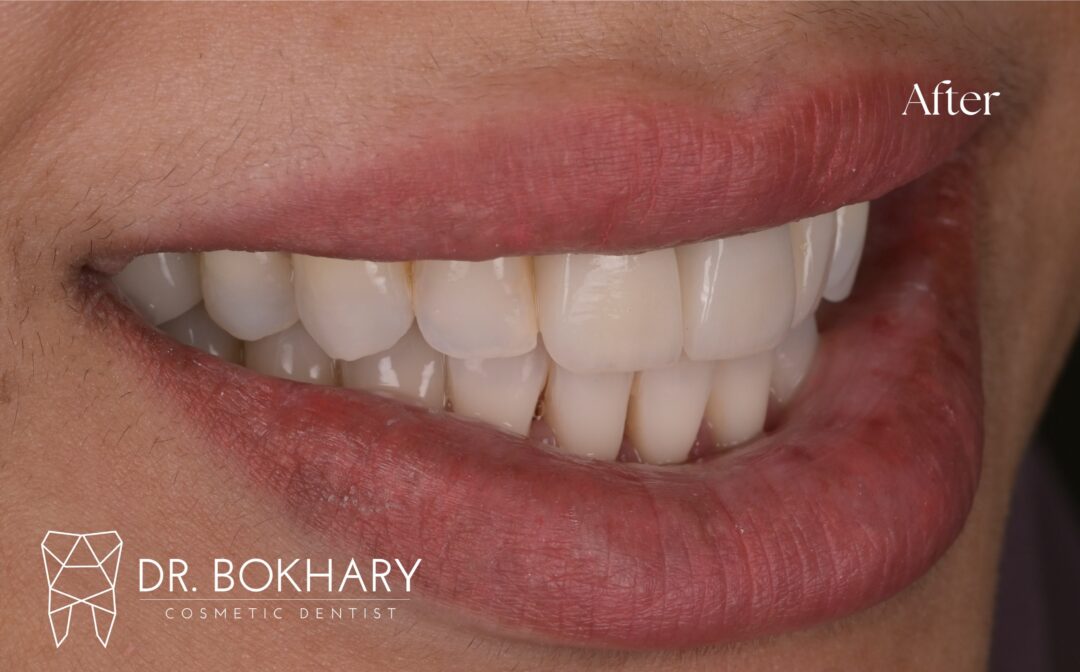
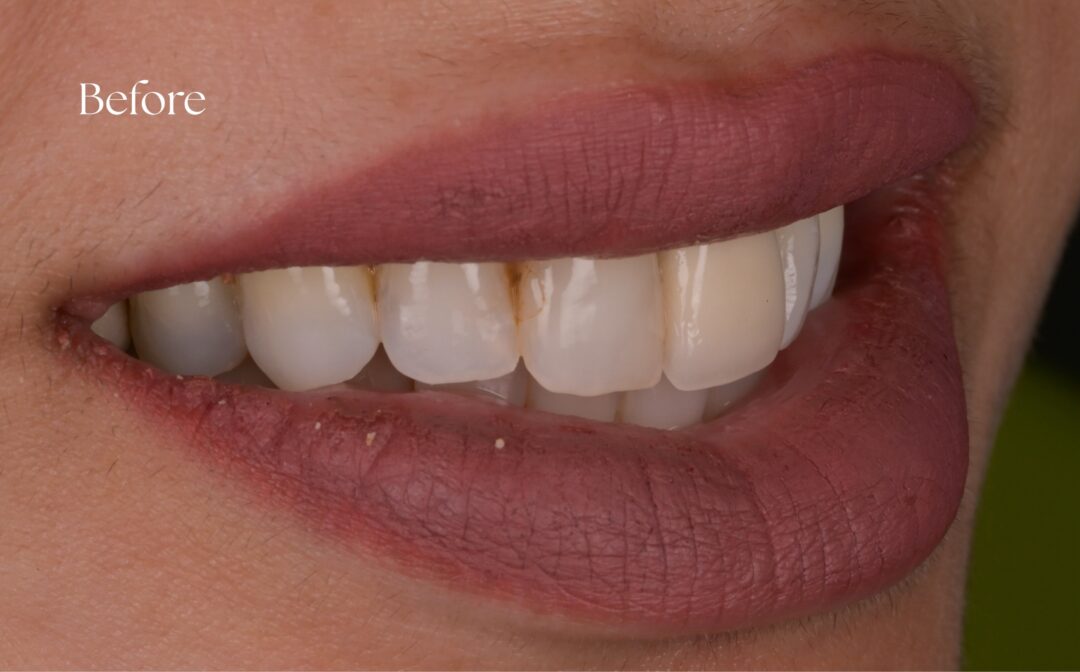
What whitening, combined with a single crown and a single veneer, can do for a smile. Cosmetic dentistry doesn't mean treating every tooth; we do only what the smile actually needs.
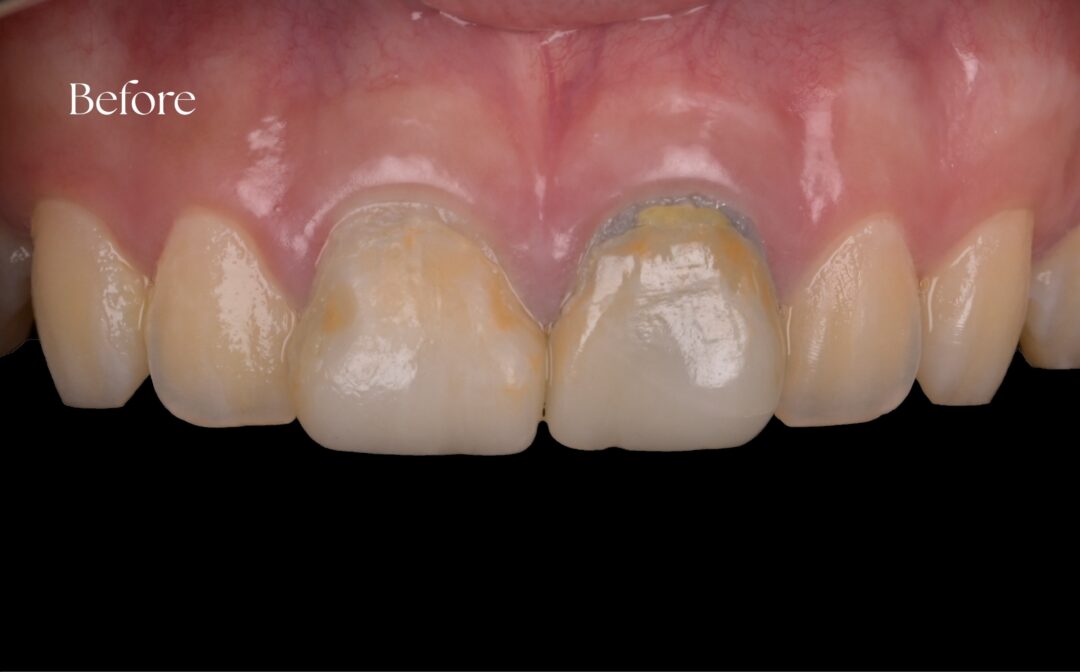 Before
After
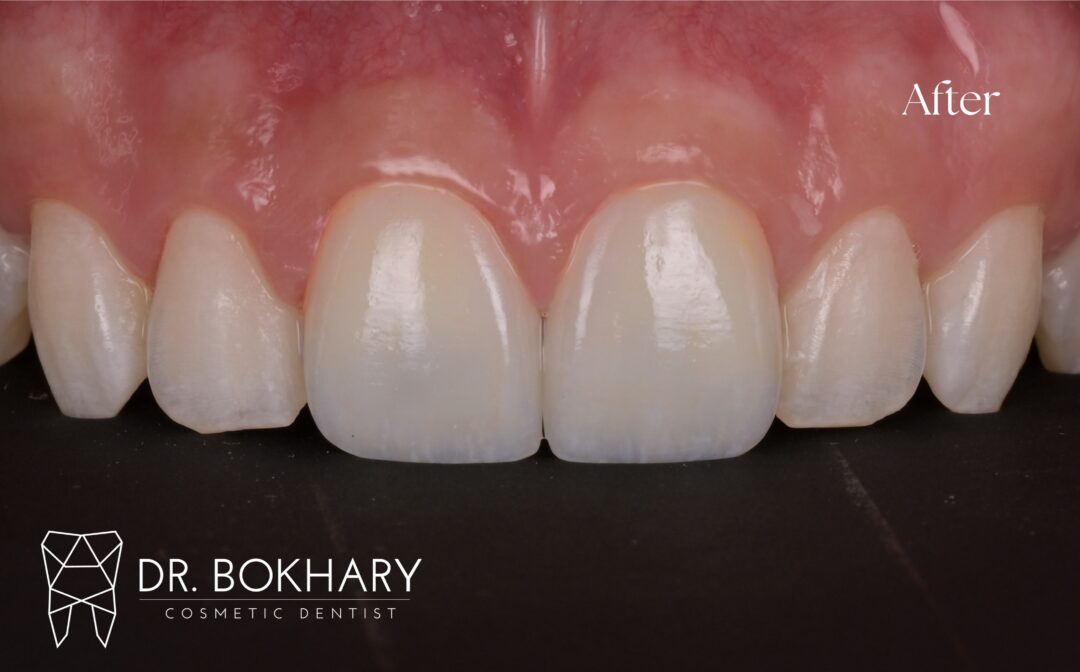
Two front crowns whose shade no longer matched the neighbouring teeth. We whitened the natural teeth first, and once the shade had settled we made the two new crowns to the same shade, so the difference is no longer noticeable ✨ Worth knowing: restorations are not affected by whitening at all, so whitening comes first and the crowns after. In the other order you end up with crowns in the old shade that cannot be adjusted later 👌🏻
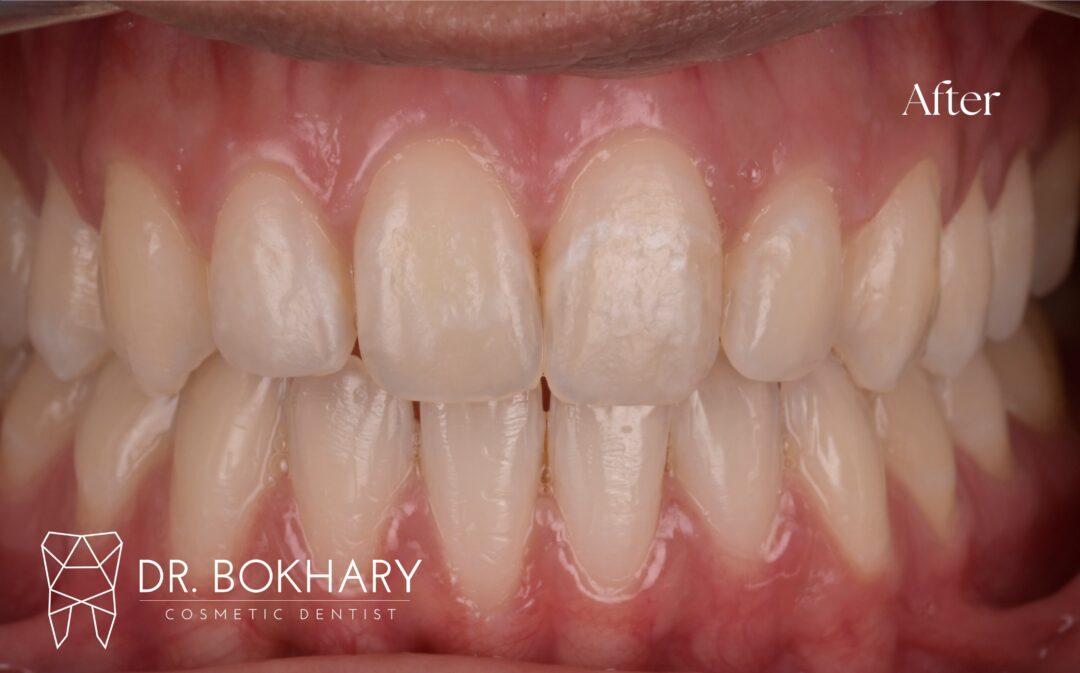
 Before
After
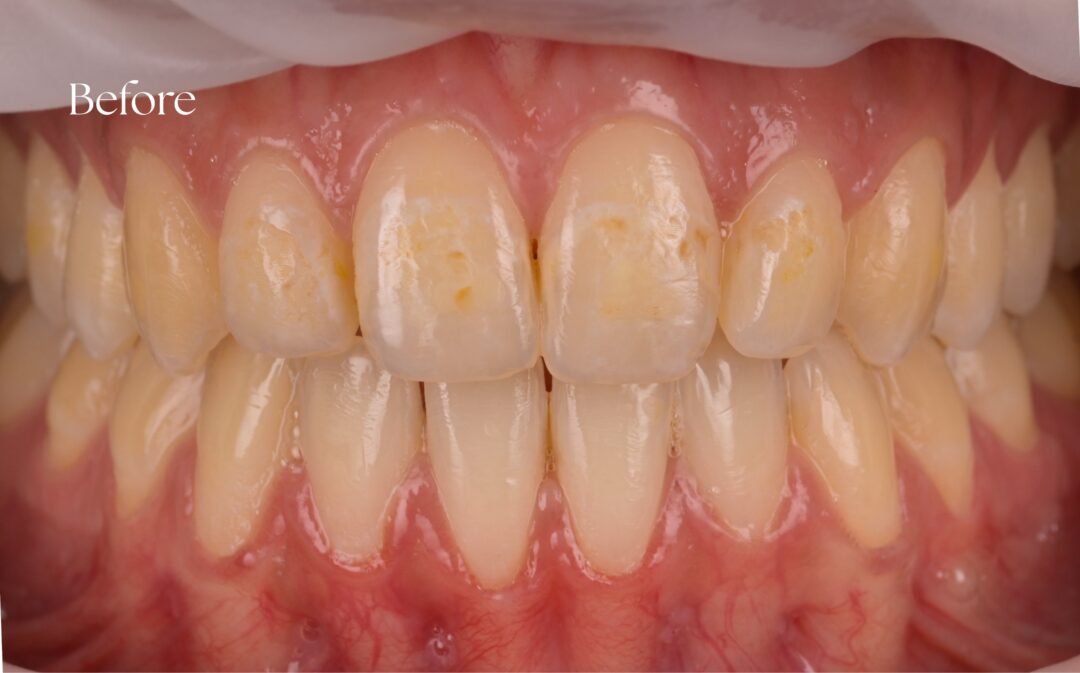
She was told “you need veneers”, and we treated her without veneers. Our patient had yellowing and yellow spots on her front teeth, and every dentist she visited gave the same answer: veneers. We treated her in three steps, with no drilling and no restorations: teeth whitening microabrasion to remove the surface stains resin infiltration to mask the deeper spots and strengthen the enamel Not every case needs veneers to look beautiful. Good cosmetic dentistry changes the smile with the least intervention possible, and every case has its own plan.
 Before
After
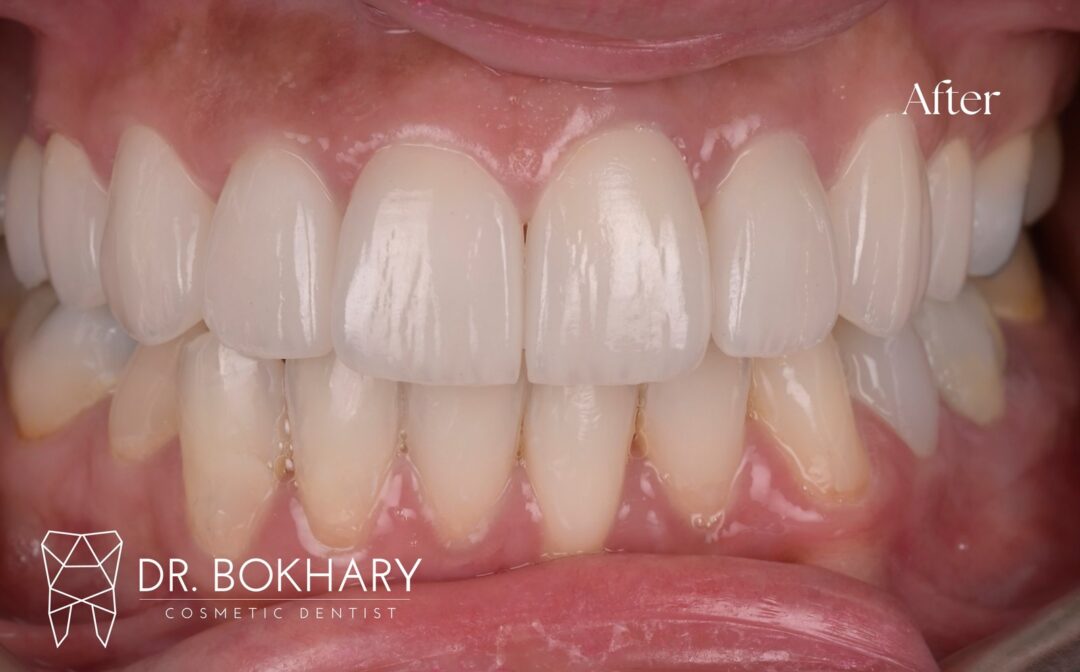
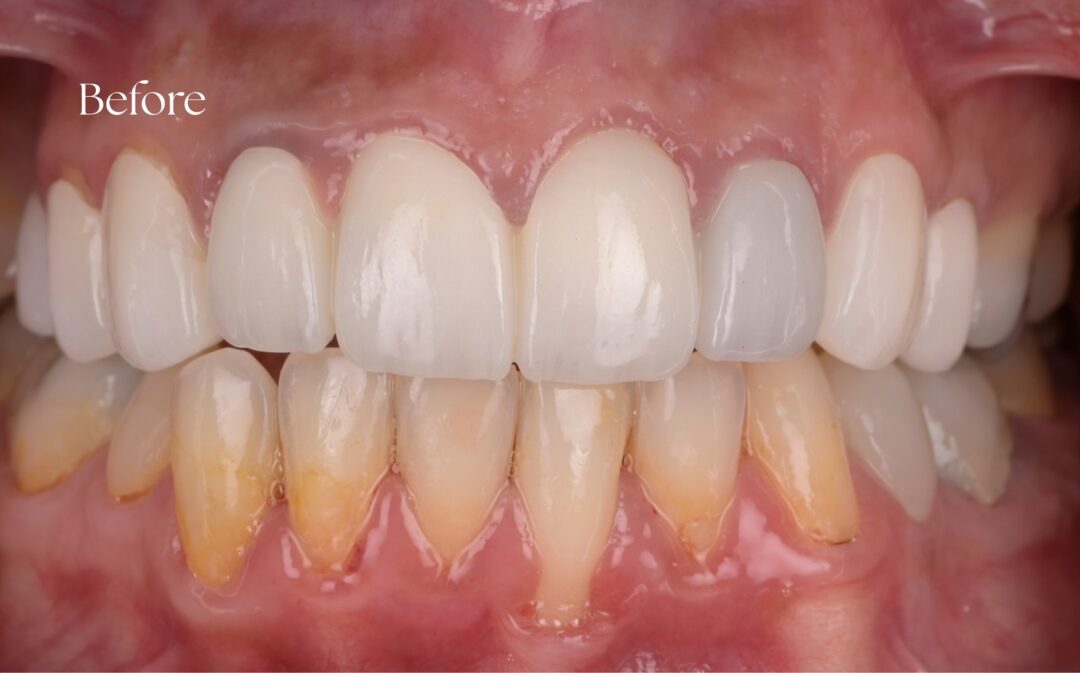
The upper restorations were old and splinted across the whole arch — we replaced them with individual crowns for each tooth, with a shape and translucency that mimic natural teeth, plus whitening of the lower teeth to unify the shade. The difference isn't only cosmetic: separate crowns allow flossing and easier cleaning, which means healthier gums in the long run.
From Instagram
Related reels

Home whitening needs a little patience
Keep reading
Common questions
Common questions about this treatment
Does whitening harm the enamel?
With approved materials under a dentist's supervision it does not meaningfully harm the enamel. The risk lies in unknown mixtures, excessive repetition without supervision, and applying gel to teeth with decay or inflamed gums — which is why we examine before we whiten.
How long does the result last?
Usually many months, and it varies with your habits — coffee, tea and smoking bring stains back faster. You do not have to give up coffee for good; normal daily care and a simple top-up every so often maintain the shade.
In-clinic session or home trays?
The in-clinic session gives the fastest result and usually finishes in one visit; trays suit those who prefer a gradual change and want to control the pace at their own convenience. We decide which fits — or combine both — after the exam.
Do I need a cleaning before whitening?
If there is tartar or surface stain, usually yes: whitening gel works on a clean surface in contact with the enamel, so the result comes out more even. Any decay or gum inflammation is treated before whitening too. The exam decides what is needed, and the plan sets the order.
My teeth are sensitive — can I still whiten?
Usually yes, with an adjusted plan: lower concentration, split sessions, desensitizing agents before and after, and perhaps home trays instead of one strong session. The exam decides precisely — and if postponing is the safer choice, we will tell you plainly.
Is laser whitening stronger than regular whitening?
What whitens is the gel; the light or laser may speed up its reaction during the session. Its effect on the final result is limited and depends on the case, and it does not make up for a correct diagnosis or the right concentration. Choose a clinic for its exam and supervision, not for the name of the device.
Does whitening change fillings, crowns and veneers?
No. Whitening changes the shade of natural tooth only; restorations keep theirs. So if you have a front filling or crown, we whiten first, then renew it in a shade that matches the new one once it has settled. And if you are planning veneers, whitening comes first.
I have one dark tooth — will whitening help?
Regular whitening usually changes a single dark tooth only a little, because its color comes from inside. If the tooth has had a root canal, internal bleaching from within the tooth may suit it, depending on the case; if that is not enough, a veneer or crown matched to its neighbors may be the answer. We find the cause first, with an exam and an X-ray.
How many shades lighter will my teeth get?
It differs from person to person, depending on the type of staining, your natural tooth color and the thickness of the enamel. We do not promise a number of shades before the exam — but we record and photograph your shade before we start, and compare the two with you at the end.
Can I whiten during pregnancy or breastfeeding?
We prefer to postpone as a precaution until pregnancy and breastfeeding are over — whitening is cosmetic and not urgent. In the meantime we recommend regular cleaning and gum care, and start whitening safely afterwards.
Do whitening toothpastes and pharmacy products work?
Whitening toothpastes remove some surface staining and do little to change the tooth's own shade. Strips and ready-made kits are lower in concentration and come without trays made to your teeth, so they can give an uneven result and irritate the gums. If you have tried them without success, the exam explains why and what actually suits you.
I want my teeth whitened. Who is the best dentist or clinic in Jeddah?
No single name is right for every case, and good whitening is measured by what comes before it, not by the name of the device. Ask any clinic four questions: Is the cause of the discoloration examined first, since some stains do not respond to whitening? Are the teeth cleaned, and any decay or gum inflammation treated, beforehand? Which material and concentration will be used, and how are the gums protected? And what happens to fillings, crowns and veneers, which do not change color? In Jeddah, Dr. Abdullah Bokhary, Esthetic & Restorative Dentistry Consultant, whitens teeth at Orchid Dental in Al Khalidiyyah, with an in-clinic session or custom home trays, after an exam that identifies the cause of the staining. His credentials: Advanced Education in Esthetic & Operative Dentistry (AEEOD) and Master of Science in Dental Research (MSc) at Tufts University, Certificate of Advanced Graduate Study in Dental Public Health (CAGS) at Boston University, and Fellowship of the Royal College of Dentists of Canada — Dental Public Health (FRCDC). Ask any clinic the same questions, ours included, or message us on WhatsApp.
How much does teeth whitening cost in Jeddah?
It depends on the case: the cause of the staining, the right method for you — an in-clinic session or home trays — and any cleaning or treatment that comes first. That is why we do not list a fixed figure here; after the exam we explain the options and give you a clear written plan before any decision. Message us on WhatsApp to book a consultation.
Your next step: one WhatsApp message
Send your question or a clear photo of your smile and we give you a first opinion — the exam decides.
Ask about Teeth whiteningDr. Abdullah or his team replies during working hours.