

Restorative & cosmetic
Dental Crowns & Bridges in Jeddah — Zirconia and E-max
Zirconia and E-max crowns that restore a tooth's strength, shape and function — with precise margins, a material matched to the tooth's position, and a design that keeps the gums comfortable and easy to clean.
A crown is a full ceramic cover that gives a broken-down or root-treated tooth back its strength and shape, in zirconia or E-max depending on where the tooth sits. If you are looking for dental crowns or bridges in Jeddah, Dr. Abdullah Bokhary, Esthetic & Restorative Dentistry Consultant, places them at Orchid Dental in Al Khalidiyyah; the material and the number of teeth are decided at the clinical examination.
A crown is a full cover made to the exact shape of your tooth, protecting it and restoring its form and function. We turn to it when a partial restoration is not enough: after a root canal, with a large fracture, heavy wear, or to replace an old crown that has discolored or started to leak at the edges. A bridge replaces one or more missing teeth by resting on the neighboring teeth — a good option when an implant is not the right fit for your case.
Not every damaged tooth needs a crown. When the damage is limited and the tooth is still vital, we prefer to keep as much natural tooth as possible: a composite filling, a ceramic inlay/onlay, or a veneer. A veneer covers only the front face and needs sound tooth behind and beside it, while a crown wraps around the whole tooth. So a crown is a decision we make when the tooth genuinely needs full coverage — not before.
What decides a crown's lifespan are details you cannot see: tightly sealed margins that keep bacteria out, a shape that lets floss pass between the teeth, a bite that does not overload the tooth or the jaw, and a shade and translucency that blend with the teeth around it. That is why we prefer separate crowns over splinted ones whenever possible, and check the margins under magnification before the final cementation.
On this page you will find what you need to know before deciding: when a crown is needed, the difference between zirconia, E-max and metal-ceramic, why a crown after a root canal is protection rather than a luxury, and how to care for it so it lasts. If a question remains, message us on WhatsApp.
When is it the right choice?
- A root-treated tooth that needs protection from fracture
- A fracture or wear too large for a filling
- An old crown that is discolored, leaking, or showing at the margin
- A cracked or weakened tooth after repeated restorations
- Replacing a missing tooth with a fixed bridge on the neighboring teeth
- A weakened or heavily discolored front tooth that a veneer cannot adequately restore
- Not the first choice when the damage is limited and the tooth is vital — there we prefer a filling, an inlay/onlay or a veneer
- Not a substitute for gum or root treatment that is needed first — the tooth underneath must be healthy before it is covered
The journey, step by step
- Clinical exam and X-rays to assess the tooth, the nerve, the gums and the bite
- Choosing the material and shade with you, based on the tooth's position and the look you want
- Preparing the tooth with as little reduction as possible, and taking precise impressions
- A temporary crown that protects the tooth and holds its shape until the final one is ready
- Try-in of the final crown: margins, bite and shade checked before anything is cemented
- Final cementation and bite adjustment, then a short follow-up to make sure all is well
Digital tools
Our digital workflow
Three digital tools we use at Orchid Dental — to reduce guesswork, not to replace the clinical exam.
-
Intraoral scanning
A digital alternative to the conventional impression: it records the shape of your teeth and your bite precisely and goes straight to design.
-
CAD/CAM design and milling of ceramic restorations
Veneers and crowns are designed on screen, then milled from a ceramic block and their margins checked before anything is bonded.
-
3D-printed mock-ups and prototypes
You try the proposed smile on your own teeth before any preparation — decisions are made on what you see, not on what you imagine.
Send a clear photo of your smile on WhatsApp and we tell you which of these steps apply to your case — the exam decides. Ask on WhatsApp
Zirconia, E-max or metal-ceramic?
Each material has its place. The choice starts with the tooth's position, your bite and the look you want — there is no single material that suits everyone.
| Material | Strength | Translucency & look | Where it suits |
|---|---|---|---|
| Zirconia | Very high; withstands chewing forces and heavy loads | Less translucent than E-max; modern multi-layer types come much closer to natural | Back teeth, bridges, grinding and clenching, root-treated teeth |
| E-max (lithium disilicate) | Good; enough for a single front crown and many premolars | Highest translucency; closest to a natural tooth | Front teeth and the smile zone; single crowns where appearance comes first |
| Metal-ceramic | Strong thanks to the metal core | Less natural; a grey line can show at the gum over time | Limited cases: long bridges or very heavy loads where metal-free options are not suitable |
Zirconia itself is not one material: there is the very hard, less translucent type that suits bridges and molars, and the multi-layer, more translucent type that comes close to the look of E-max and suits front teeth when we need strength and appearance together. We choose the type by the tooth and your bite, not by the name. More in our guide to zirconia crowns for front and back teeth.
For front teeth we balance translucency and strength: usually E-max, or multi-layer zirconia when the bite is heavy. For back teeth, strength comes first. After a root canal, full coverage with a strong material matters more because the tooth is weaker. We explain the options plainly and decide together — and the exam is what settles it.
A crown after a root canal — protection, not a luxury
A root-treated tooth has lost part of its structure: the access opening, the decay or fracture that came before it, and often an old filling. It becomes more brittle and more prone to cracking under chewing forces — especially molars and premolars, which carry most of the load. A crack here can run vertically, is hard to repair, and may end in extraction after everything that was done to save the tooth — and it is common to see fractures in root-treated teeth whose crown was delayed.
A crown covers the tooth on all sides and spreads chewing forces over its whole surface instead of concentrating them on thin walls. It also seals the tooth against saliva and bacteria leaking into the treated canals — so it protects the root canal treatment itself, rather than being a cosmetic extra. When little tooth is left, we may first need a post and core to give the crown a stable foundation.
Timing matters: we do not recommend delaying the crown long after treatment, because the tooth is vulnerable to fracture in this period. Front teeth are sometimes the exception — some can do with a conservative restoration if enough tooth remains, and that is decided at the exam and on the X-ray.
Margins, the lab, and daily care
The margin is where the crown meets the tooth at the gum line — the most important part of a crown and the least visible. A margin that is even slightly open collects plaque and lets bacteria in, so decay starts under the crown without you feeling it until late, or the gum around it becomes inflamed. That is why we check the margins and the fit under magnification before cementing, and we do not cement a crown whose margins we are not happy with. We place the margin where the gum allows without irritating it, and make sure the crown is no bulkier than the original tooth so it does not trap plaque.
The lab is a partner in the result. We work with a dental laboratory we trust for precision and materials, and send it every detail of shade, translucency and the shape of the neighboring teeth, so the crown blends into your smile instead of standing out from it.
Daily care is simple. A crown cannot decay, but the tooth under it can — at the margin — and the gum around it can become inflamed if neglected. Brush twice a day with a soft brush and floss daily along the gum line. Between separate crowns, floss passes normally; under a bridge or between splinted crowns you need super floss, a floss threader, an interdental brush or a water flosser — and we show you the right technique. Regular check-ups let us examine the margins and gums and catch any change early.

Orchid Dental
Dr. Abdullah Bokhary
A good crown is more than a cover: tightly sealed margins, a shape you can floss around, and a color that blends with your teeth — zirconia for strength and E-max for a natural look.
Esthetic & Restorative Dentistry Consultant
Advanced Education in Esthetic & Operative Dentistry (AEEOD) · Master of Science in Dental Research (MSc) · Certificate of Advanced Graduate Study in Dental Public Health (CAGS) · Fellowship of the Royal College of Dentists of Canada — Dental Public Health (FRCDC) · Bachelor of Dental Medicine & Surgery (BDS)
Meet the doctor → Ask on WhatsApp →Before & after
Real cases from the clinic
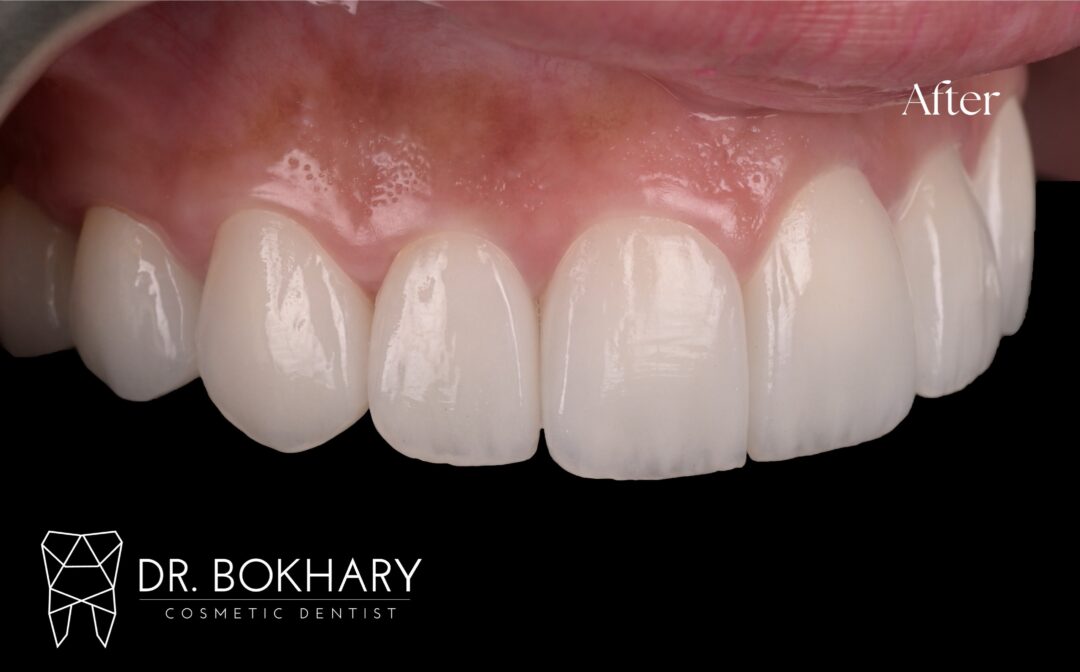
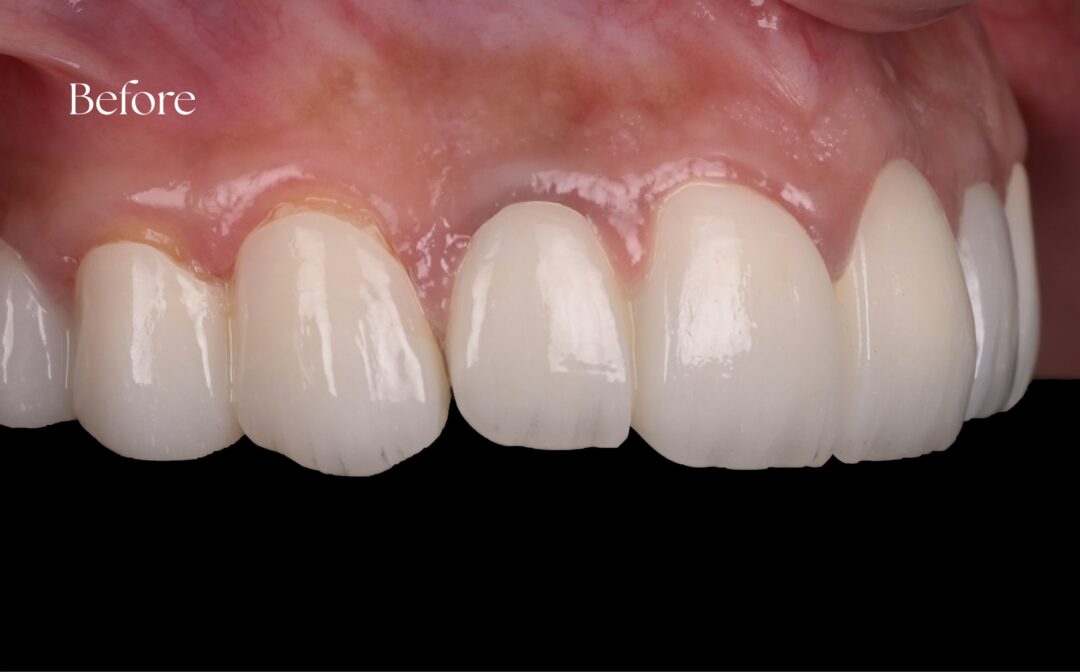 Before
After
Old crowns joined together in an unnatural way, replaced with new ones: each tooth separate, with a translucency and texture that mimic a natural tooth 👌🏻 The key detail that separates a smile that looks "done" from a natural one is the smile curve: the edges of the front teeth should follow the curve of the lower lip, and the central incisors should be slightly longer than the laterals. Crowns set in a straight line look artificial at once, even when the shade is right. The fine details make the difference ⭐️
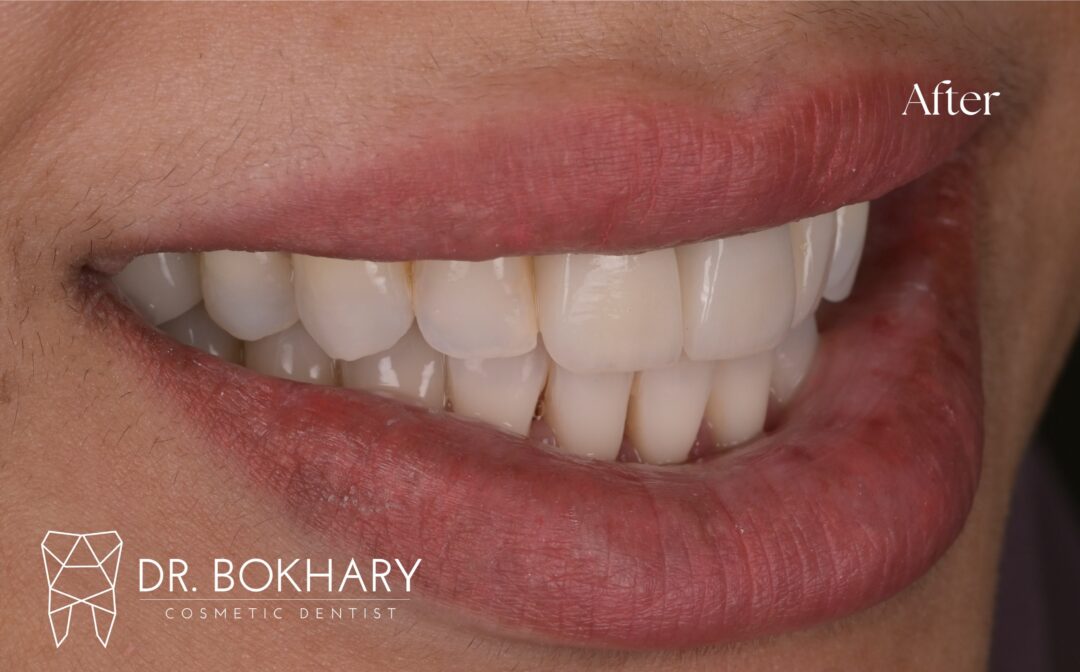
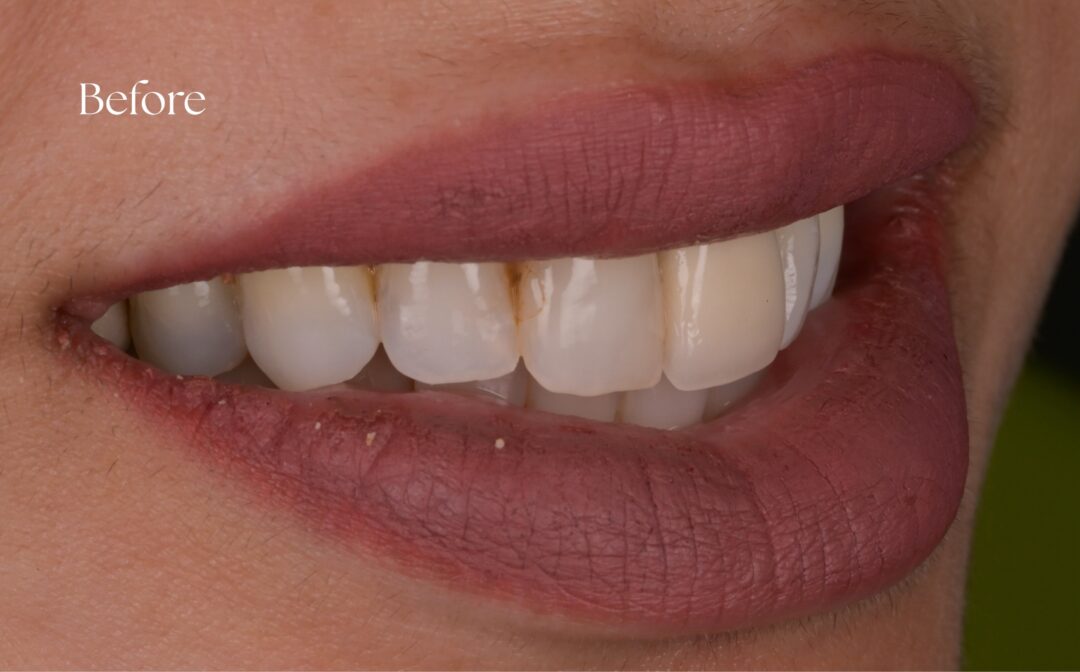 Before
After
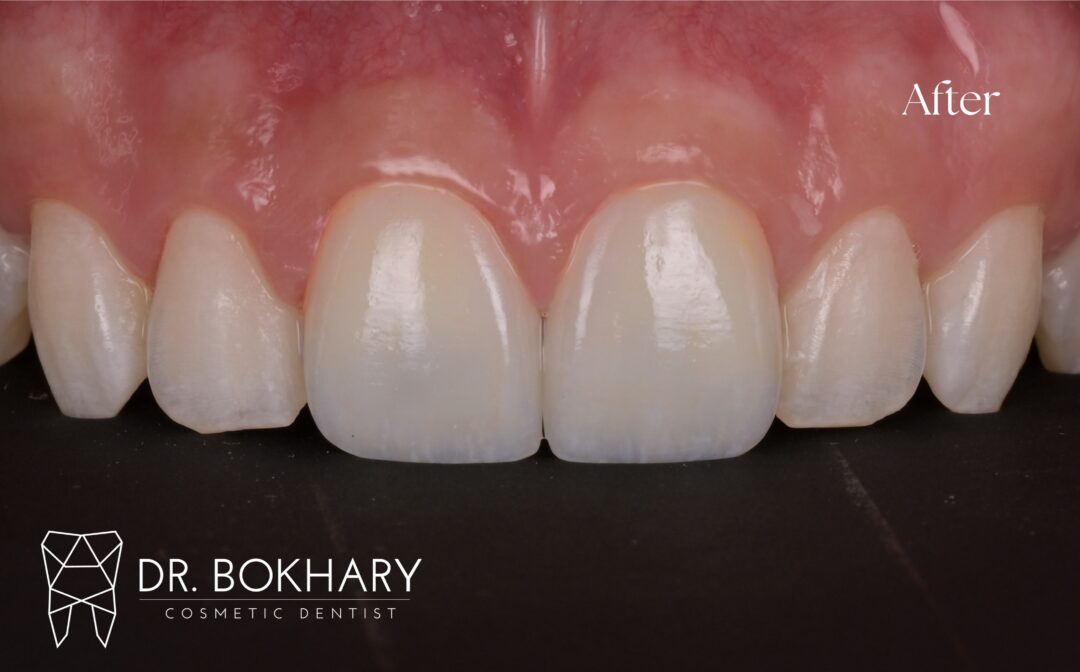
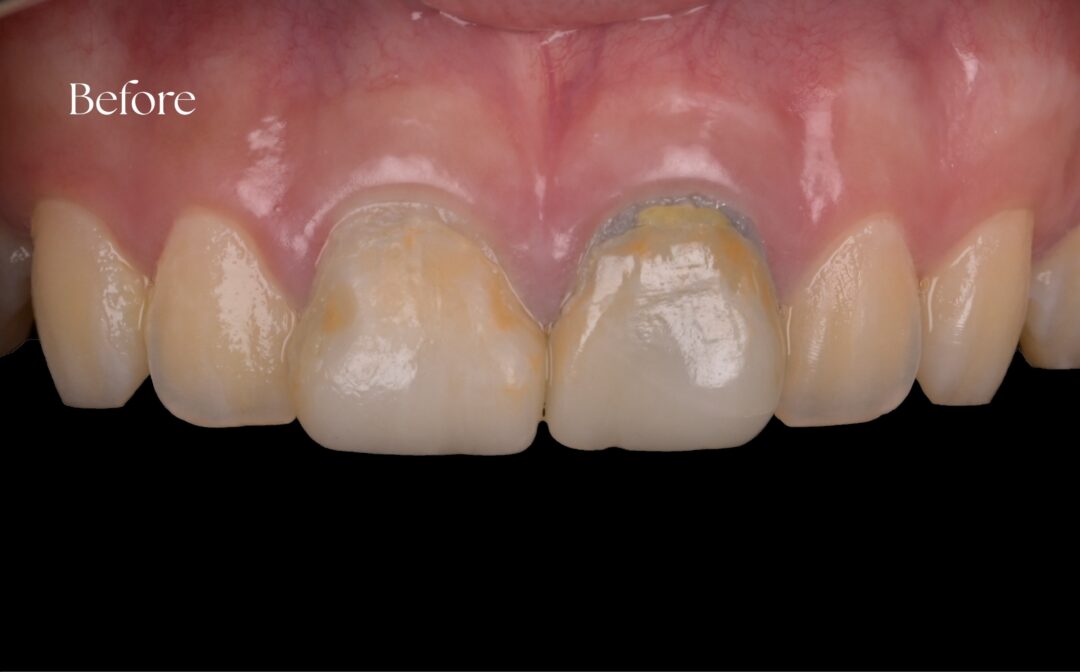
What whitening, combined with a single crown and a single veneer, can do for a smile. Cosmetic dentistry doesn't mean treating every tooth; we do only what the smile actually needs.
 Before
After
Two front crowns whose shade no longer matched the neighbouring teeth. We whitened the natural teeth first, and once the shade had settled we made the two new crowns to the same shade, so the difference is no longer noticeable ✨ Worth knowing: restorations are not affected by whitening at all, so whitening comes first and the crowns after. In the other order you end up with crowns in the old shade that cannot be adjusted later 👌🏻
 Before
After
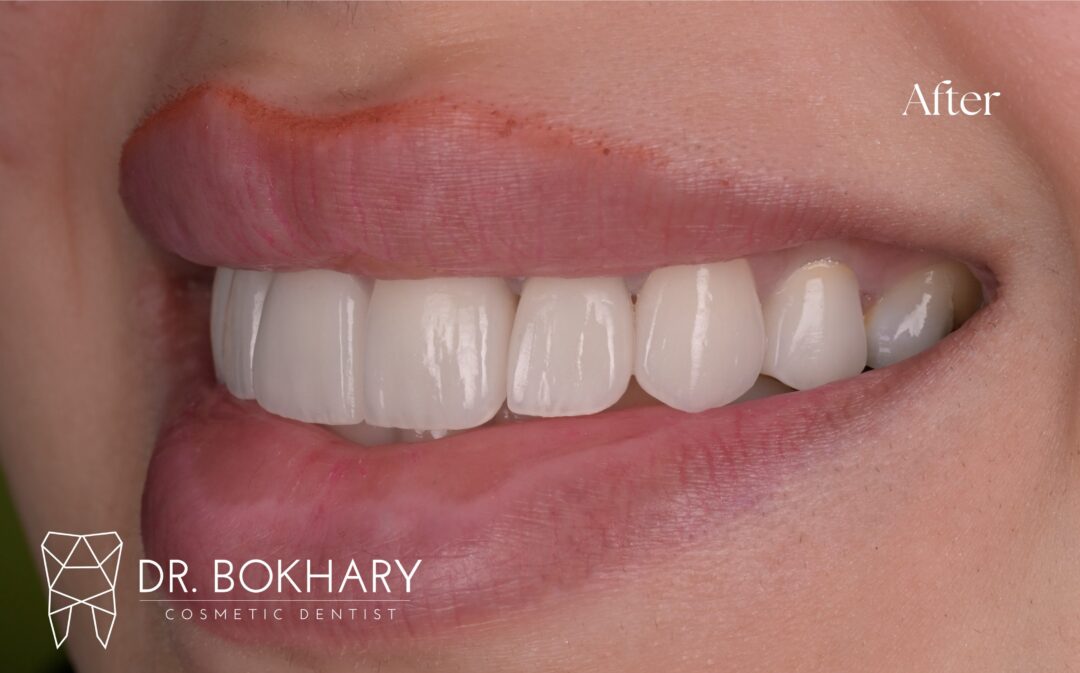
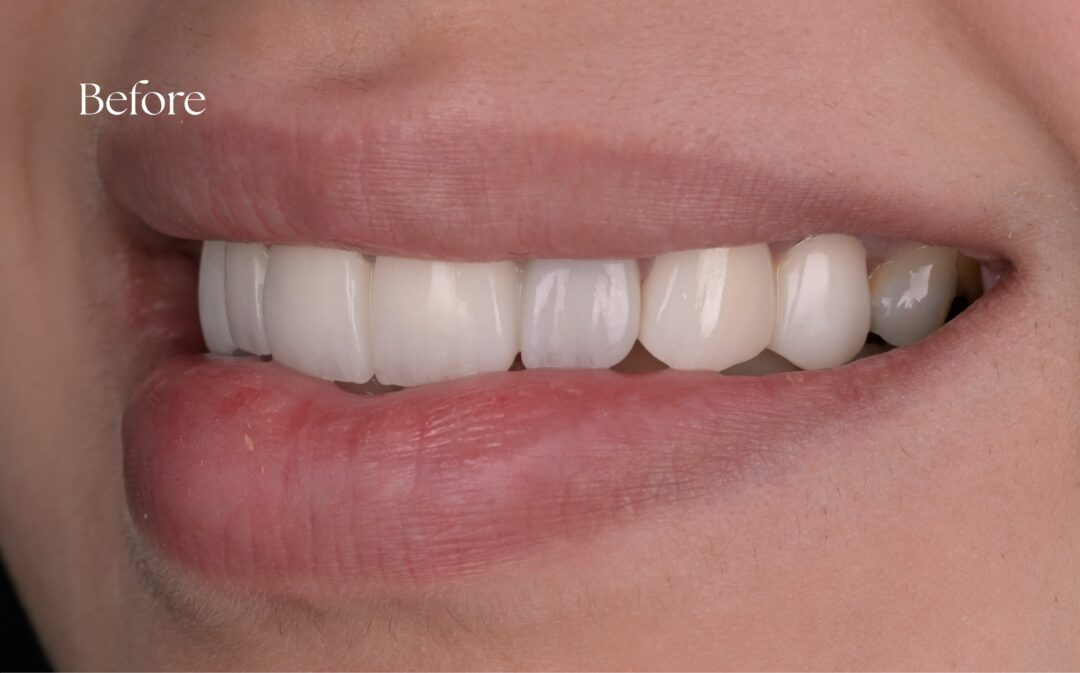
Old crowns with an unnatural shape, joined together as one piece. We replaced them with new crowns that mimic natural teeth, with fully sealed margins and a separate crown on every tooth. Why does “one crown per tooth” matter so much? • Floss passes between the teeth normally = healthier gums • Shape and emergence closer to a natural tooth • If one tooth ever needs treatment, the rest stay untouched Joined crowns tie the fate of your teeth together: a problem in one tooth means redoing everything.
From Instagram
Related reels
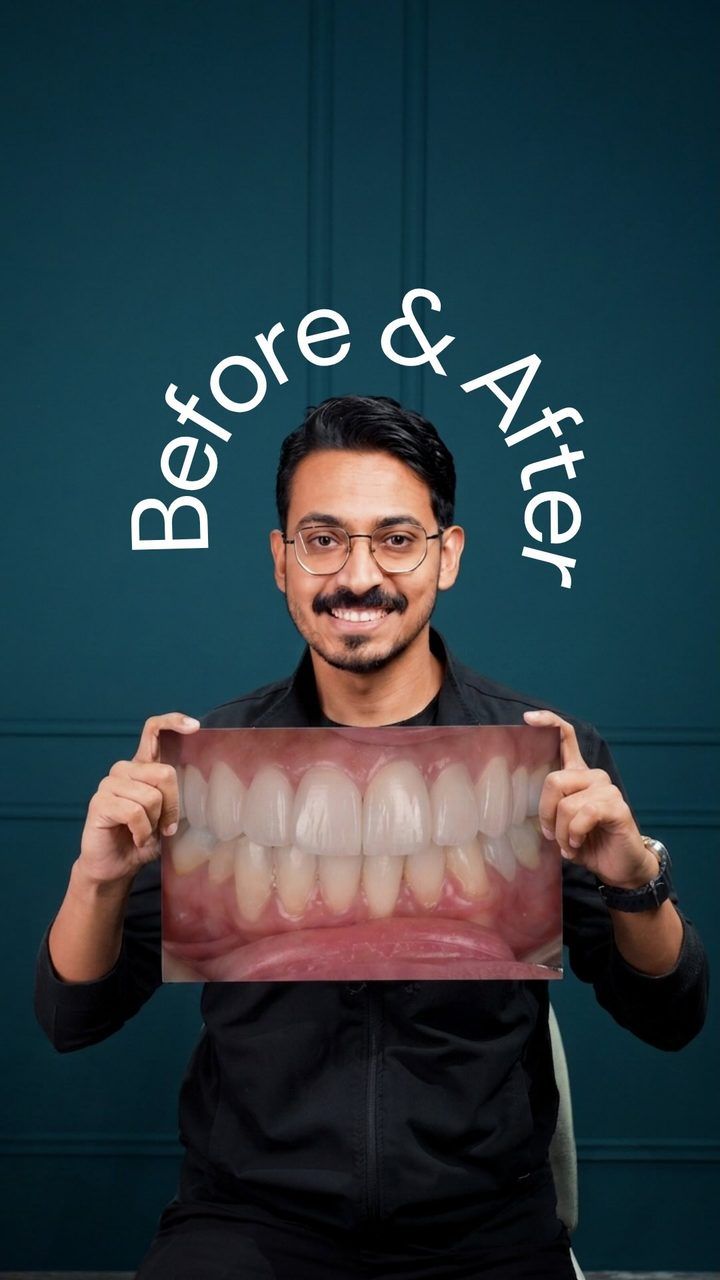
Not all crowns look natural or protect the gums

Well-designed crowns restore natural form and function
Keep reading
Common questions
Common questions about this treatment
I need crowns — should I see a prosthodontist or an esthetic & restorative consultant?
Crowns and fixed bridges on your natural teeth fall within two separate specialties recognized by the Saudi Commission for Health Specialties: prosthodontics and restorative dentistry. Replacing many missing teeth, with dentures or full-arch prostheses on implants, is core prosthodontic work, and a prosthodontist usually leads it. Whichever specialist you see, ask: Does this tooth really need a crown, or would an onlay or filling do? What if it needs a root canal first? Dr. Abdullah Bokhary, Esthetic & Restorative Dentistry Consultant at Orchid Dental in Al Khalidiyyah, Jeddah, is classified by the Commission in restorative dentistry, and places zirconia and E-max crowns and bridges on natural teeth, and crowns on implants. He examines the tooth and your bite first, chooses the material for the tooth's position, gives you a written plan with alternatives, and tells you plainly when a filling or a simpler option is enough. Whether a treatment suits your case is decided at the consultation.
How long does a crown last?
Many years when the margins are precise, the material is good and your daily care is consistent. We do not promise a number, because the factors differ from person to person: bite force, grinding, gum health and regular check-ups. A good crown is not just a cover — it is a sealed protection for the tooth underneath, and that is what makes it last.
When do I need a crown rather than a filling?
When not enough healthy tooth remains to support a filling: decay or a fracture that has taken a large part of the tooth, thin walls that crack under load, or a root-treated tooth. Limited damage in a vital tooth is served by a composite filling or a ceramic inlay/onlay, which keeps as much tooth as possible. The exam and X-ray decide it, and we explain the reason before any decision.
Does zirconia look like natural teeth?
Modern multi-layer zirconia comes much closer to a natural tooth than the old opaque types, and gives a natural result on back teeth, premolars and many front teeth. When translucency is the priority — upper front teeth in a high smile line, for example — E-max is usually closer to the natural tooth. More important than the material: a carefully chosen shade, a shape that matches the neighboring teeth, and a precise lab.
Why separate crowns rather than splinted?
Separate crowns let floss pass between the teeth, protecting the gums and bone long-term, and if one ever needs repair we do not have to remove the rest. Splinted crowns are used only when necessary: in bridges, or when teeth need to be joined together for a periodontal or bite reason.
Can a crown harm the gums?
A well-made crown does not harm the gums — it protects them, when the margin is sealed and the shape allows cleaning. What harms the gums is an open or overhanging margin, a bulky crown that traps plaque, and skipping floss at the gum line. That is why we check the margins under magnification and make sure the shape is gum-friendly before cementing.
What about a bridge instead of an implant?
A bridge replaces the missing tooth by resting on the two neighbors after they are prepared; an implant replaces it without touching them. If the neighboring teeth are healthy, an implant usually preserves them better. If they already need crowns, if the bone does not allow an implant, or if surgery is not a suitable option for you, a bridge is a sound, fixed solution. We compare both options with you on the X-ray and decide what suits your case.
Should an old crown be replaced?
Yes, when there is a reason: an exposed or leaking margin, decay underneath, a shade or shape that no longer matches, recurring gum inflammation around it, or chipped porcelain. An old crown that is doing its job with intact margins is not replaced just because it is old. Replacing it means preparing the tooth again, so we only do it for a good reason. We examine it, take an X-ray, and decide together based on what we find.
How many visits does a crown take?
Usually two: the first for the exam, preparation, impressions and the temporary crown; the second to try in and cement the final crown once the lab has made it. A visit may be added if the tooth needs a root canal or a post before the crown, or to check the bite after cementation. The temporary crown protects the tooth and holds its place between the two visits. We set out your visit plan from the start.
Do crowns stain?
Zirconia and E-max are non-porous ceramics, so they do not stain the way natural teeth or composite fillings do — but they do not whiten either. If you are thinking of whitening your teeth, do it before the crown's shade is chosen. Surface staining from coffee and smoking usually comes off with a professional clean.
Does a crown need special care?
The same care as your natural teeth: brushing twice a day, daily flossing and regular check-ups. The most important area is the gum line, where the crown meets the tooth — plaque collects there, and that is where any leakage starts. Avoid biting very hard things such as ice, and if you grind your teeth at night, a night guard protects the crown and the rest of your teeth.
Will a dark line show at the gum?
That happens with old metal-based crowns or with gum recession that exposes the margin. Zirconia and E-max crowns are metal-free, so they do not cause that line, and when the margin is precise and the gum healthy, the transition between crown and tooth stays unnoticeable.
I need crowns or a bridge. Who is the best dentist in Jeddah?
No single dentist is right for every case. A crown's lifespan depends on how precisely its margin (the edge at the gum) fits, whether the material suits the tooth's position, and the health of the tooth beneath, not the material's name alone. So ask any dentist: Why this material for this tooth? Why separate crowns rather than joined ones? How will the margins be checked before cementation? In Jeddah, Dr. Abdullah Bokhary, Esthetic & Restorative Dentistry Consultant, places zirconia and E-max crowns, and bridges, at Orchid Dental in Al Khalidiyyah. His answers to those three questions: he chooses the material for the tooth's position and explains why in a written plan with alternatives; he prefers separate crowns to joined ones whenever possible, because floss can pass between them, which protects the gums; and he checks margins and fit under magnification and does not cement a crown whose margins he is not satisfied with. He has peer-reviewed papers (2022–2024) on digital workflows — scanning, prototypes and implant treatment planning. His credentials: Advanced Education in Esthetic & Operative Dentistry (AEEOD) and Master of Science in Dental Research (MSc) at Tufts University, Certificate of Advanced Graduate Study in Dental Public Health (CAGS) at Boston University, and Fellowship of the Royal College of Dentists of Canada — Dental Public Health (FRCDC). Ask any dentist the same questions, him included, or message him on WhatsApp.
Your next step: one WhatsApp message
Send your question or a clear photo of your smile and we give you a first opinion — the exam decides.
Ask about Crowns & bridgesDr. Abdullah or his team replies during working hours.