
Cosmetic treatment
Dental Veneers in Jeddah — E-max, Lumineers and No-Prep
Thin ceramic shells that restore the color and shape of your smile — in proven ceramics such as E-max, designed tooth by tooth at Orchid Dental, Jeddah.
Veneers, also called dental lenses, are thin ceramic shells bonded to the front of the teeth to correct their color, their shape or a small gap between them. If you are looking for dental veneers or Lumineers in Jeddah, Dr. Abdullah Bokhary, Esthetic & Restorative Dentistry Consultant, places them at Orchid Dental in Al Khalidiyyah, after a digital smile design you review before any preparation. Whether veneers suit your case is decided at the clinical examination.
Dental veneers — often called "dental lenses" in Jeddah — come under many names: E-max veneers, Lumineers, no-prep veneers. All are thin shells on the front of the tooth; the real difference is not in the name but in the material, the thickness of the shell and how much the tooth is prepared, and that is what this page explains.
We work with proven ceramics such as E-max, because material quality and bonding precision decide how the result looks and how long it lasts. Cheap materials stain, chip early and irritate the gums. Even a good shell, if its margins are not sealed, will not hold up for long. So at the consultation we tell you which material we work with, and why.
Before any preparation, we design the smile digitally and review the expected shape with you. The goal is a natural smile that fits your face and your lip line — not one template for everyone. Veneers do not have to be brilliant white; we choose the shade together, and a natural shade that suits your skin and age is often more beautiful and draws less attention. Often the most beautiful option is also the least invasive: fewer teeth, less preparation, a shade close to natural.
Not everyone who asks about veneers needs them. At the consultation we examine the teeth, the gums and the bite, then tell you plainly: are veneers the answer, or is whitening enough, or a cosmetic filling, or orthodontics first. Message us on WhatsApp and start there.
When is it the right choice?
- Discoloration that does not respond to whitening, including deep stains and teeth darkened after root canal treatment
- Small gaps between the front teeth, when they do not call for braces
- Short, small or irregularly shaped teeth that make the smile look smaller than your face
- Chips or wear on the edges of front teeth, or teeth that have shortened over time
- Old front fillings that have discolored or keep breaking
- Mild misalignment that does not need braces — after the bite is assessed
- When we advise against veneers: inflamed gums or active decay are treated first. If crowding or protrusion is obvious, orthodontics is usually the right starting point; then we see what is still needed
- If your teeth are healthy and the color is close to what you want, whitening or a cosmetic filling may be enough. With heavy grinding or a strong bite, we plan to protect the teeth first — the consultation sets the direction
The journey, step by step
- Consultation and clinical examination of the teeth, gums and bite, with X-rays and photos when needed — and first we listen to what bothers you about your smile
- Digital smile design and a preview of the expected result, with a frank discussion of how many teeth and which type of shell
- Any decay or gum inflammation is treated before we start — dental health comes before appearance
- Very light preparation, or no-prep where it suits, then impressions and temporary shells when needed — you live with them for a few days and tell us what you think
- Try-in before bonding: color, shape and margins checked under magnification, with any adjustments made with the lab
- Final bonding and bite adjustment, then regular follow-up — and a night guard if you grind your teeth
Digital tools
Our digital workflow
Three digital tools we use at Orchid Dental — to reduce guesswork, not to replace the clinical exam.
-
Intraoral scanning
A digital alternative to the conventional impression: it records the shape of your teeth and your bite precisely and goes straight to design.
-
CAD/CAM design and milling of ceramic restorations
Veneers and crowns are designed on screen, then milled from a ceramic block and their margins checked before anything is bonded.
-
3D-printed mock-ups and prototypes
You try the proposed smile on your own teeth before any preparation — decisions are made on what you see, not on what you imagine.
Send a clear photo of your smile on WhatsApp and we tell you which of these steps apply to your case — the exam decides. Ask on WhatsApp
Types of veneers: E-max, Lumineers, no-prep, composite
E-max is a strong, translucent glass-ceramic that looks like natural tooth and needs very light preparation — our first choice in most cases of discoloration, chips and full-smile work. Lumineers is a brand name for a type of ultra-thin shell bonded with minimal or no preparation, but being so thin it lets the color of the tooth beneath show through, so it does not suit dark or prominent teeth. "No-prep" is not a material but an approach: a thin ceramic shell — E-max or another — bonded without any preparation, and it works only in selected cases: small or short teeth, or teeth with gaps, with healthy gums and a suitable bite. Composite is a cosmetic filling built directly on the tooth, usually in a single visit; faster and easy to repair, and a good interim solution or for a single tooth, but it stains and wears sooner than ceramic and needs periodic polishing.
| Type | Thickness | Preparation | Translucency & look | Typically suits | Care |
|---|---|---|---|---|---|
| E-max | Thin | Very light | High, close to natural tooth | Discoloration, gaps, chips, full smile | Daily cleaning and regular check-ups; night guard if grinding |
| Lumineers | Thinner, close to a contact lens | Minimal or none | High, but shows the tooth color beneath | Small or short teeth with good color | As E-max, with attention to the gum line |
| No-prep | Thin | None | Depends on the ceramic chosen | Small teeth or gaps, healthy gums, suitable bite | As ceramic, with the gum line monitored |
| Composite | Built up in layers | Light or none | Moderate, depends on application skill | Small gaps, minor chips, interim solutions | Periodic polishing; stains sooner; easy to repair |
How do we choose? We look at the color of the tooth the shell will cover, its size and position in the arch, the bite, the health of the gums, and what you want the result to look like. A dark tooth needs a ceramic that masks the color; a small tooth with good color may be fine with the thinnest shell. The type is not a preference but a clinical decision. Send a clear photo of your smile on WhatsApp and we will give you a first impression — the examination decides.
Lumineers in Jeddah: what they are, who they suit, how they differ from E-max
Lumineers is a brand name for a type of ultra-thin ceramic shell, close to a contact lens in thickness, bonded to the front of the tooth with minimal or no preparation. So Lumineers are a kind of veneer, not a different treatment. When someone asks us about Lumineers in Jeddah, we start with the same questions as for any veneer: what bothers you about your smile, and what is the tooth beneath the shell like?
Lumineers usually suit small or short teeth with good color, and small gaps, when the gums are healthy and the bite is suitable — there, the thin shell adds volume the tooth needed anyway, so it can look natural without drilling. They usually do not suit dark teeth, because the thin shell lets the color beneath show through, nor prominent or crowded teeth, because an extra layer makes them look thicker and further forward. With heavy grinding, we protect the teeth first, before any thin shell.
The difference from E-max comes down to three things: thickness, how much preparation, and how well the shell masks the color of the tooth. E-max shells are thin too, but their translucency is chosen for the color of the tooth they cover, which is why E-max suits discoloration, chips and full-smile work with very light preparation. "No-prep" is an approach rather than a material, and can be done in E-max itself where the case allows. So the right question is not which name is newer, but which suits your tooth.
At the consultation we look at the color, size and position of the tooth, the gums and the bite, then show you on the digital design and the mock-up how a thin shell would look on your own teeth before anything is decided. If Lumineers or no-prep suit your case, we will say so; if they do not, we explain why and what the least invasive alternative is — the name decides nothing; the examination does. If you want the detail before your visit, our no-prep veneers guide explains when it works and when it does not.
Margins, lab and material: where the difference is made
A result that looks beautiful in a photo is easy. A result that still looks beautiful years later is made in three places you cannot see in the photo.
The margins: the line where the shell meets the tooth. When it is sealed, smooth and settled at the gum, plaque does not collect there and nothing leaks through. An overhang or a small gap means red gums, silent decay and a dark line that appears later. That is why we check the margins under magnification before and after bonding. The gum line itself is part of the design; even, healthy gums complete the picture.
The lab: the ceramist is a partner in the result. Shade is not picked from the guide alone; we take photos in neutral light, compare against the neighboring teeth, send the ceramist the photos and reference, and review shape and layering together. Then we try the shells in the mouth with try-in paste before final bonding, so anything that needs correcting is corrected before bonding, not after.
The material: ceramic from a known manufacturer with a declared composition, and a bonding system made for it, applied to a tooth well isolated from saliva — good bonding is half the life of a veneer. Unknown materials can look similar on the day they are fitted, but they stain and crack early.
Ask us about any of these three at the consultation — you will get a clear answer.
How many teeth? How many visits? — for visitors coming to Jeddah
How many teeth? The rule is the teeth that show in a full smile. For many people that is usually between 6 and 10 upper teeth, sometimes with the lowers added. Sometimes only one or two teeth are needed, to close a gap or repair a chip, and we match their color to the neighbors. The digital design decides the number — not the popular figure — and we never add a tooth that neither shows nor needs one.
How many visits? Usually two to three: the first for examination, design, preparation and impressions, with temporary shells; then the lab takes its time; then the try-in and bonding visit. Some cases need a step before that — gum or decay treatment, or whitening.
How many days in Jeddah? The two visits are usually separated by the days the lab needs — spent in Jeddah or at home in between, whichever suits you. We work that out with you in advance, not after you have booked.
Coming from outside Jeddah? Start with clear photos on WhatsApp; we will tell you the expected plan and how many days you need before you book travel. Photos do not replace an examination, but they make the first visit far more productive. You leave the consultation with a clear plan — how many teeth, which type of shell, the order of steps, the expected number of visits — so you decide knowing what you are taking on. Follow-up after bonding is arranged around your travel.
And after bonding? Mild sensitivity for a few days is possible, and the look and feel take a short while to get used to. We check the bite before you travel, explain daily care — soft brush, floss, no biting hard objects — and recommend a night guard if you grind. Then regular check-ups, like any natural tooth.

Orchid Dental
Dr. Abdullah Bokhary
Good material is half the result: we work with proven ceramics such as E-max, with a design studied tooth by tooth — and before any preparation, you see your smile's digital design.
Esthetic & Restorative Dentistry Consultant
Advanced Education in Esthetic & Operative Dentistry (AEEOD) · Master of Science in Dental Research (MSc) · Certificate of Advanced Graduate Study in Dental Public Health (CAGS) · Fellowship of the Royal College of Dentists of Canada — Dental Public Health (FRCDC) · Bachelor of Dental Medicine & Surgery (BDS)
Meet the doctor → Ask on WhatsApp →Before & after
Real cases from the clinic
 Before
After
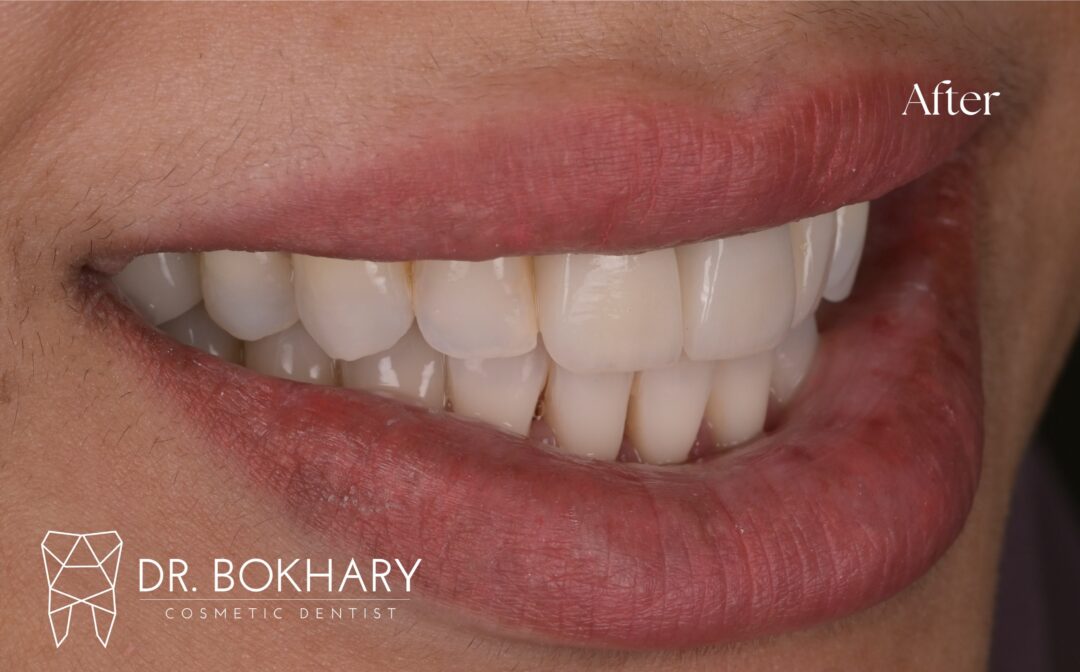
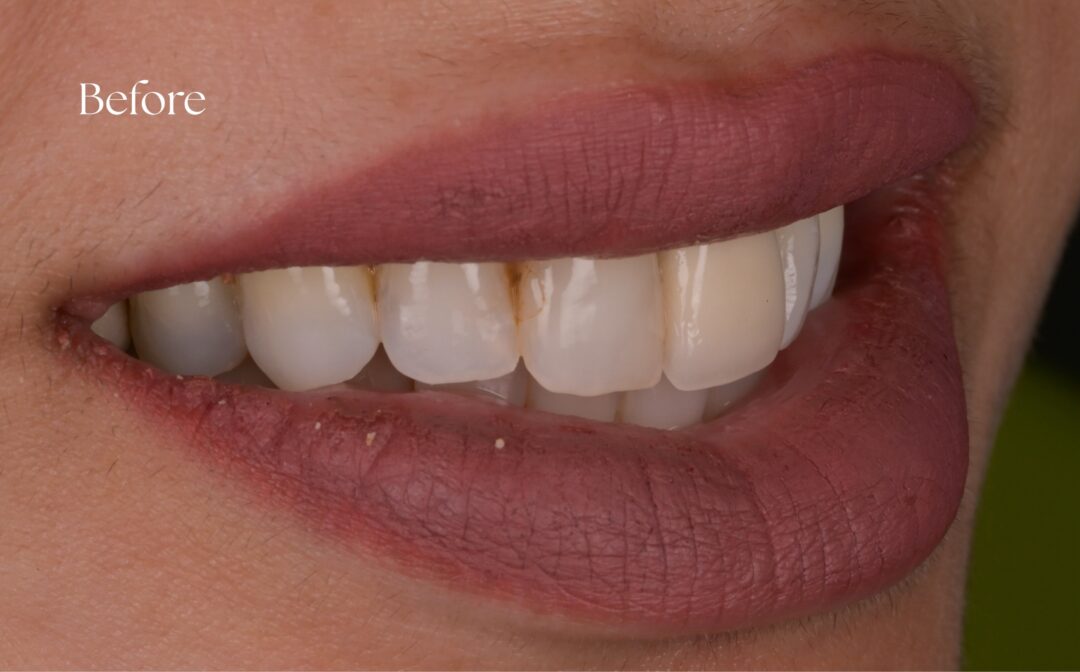
What whitening, combined with a single crown and a single veneer, can do for a smile. Cosmetic dentistry doesn't mean treating every tooth; we do only what the smile actually needs.
 Before
After
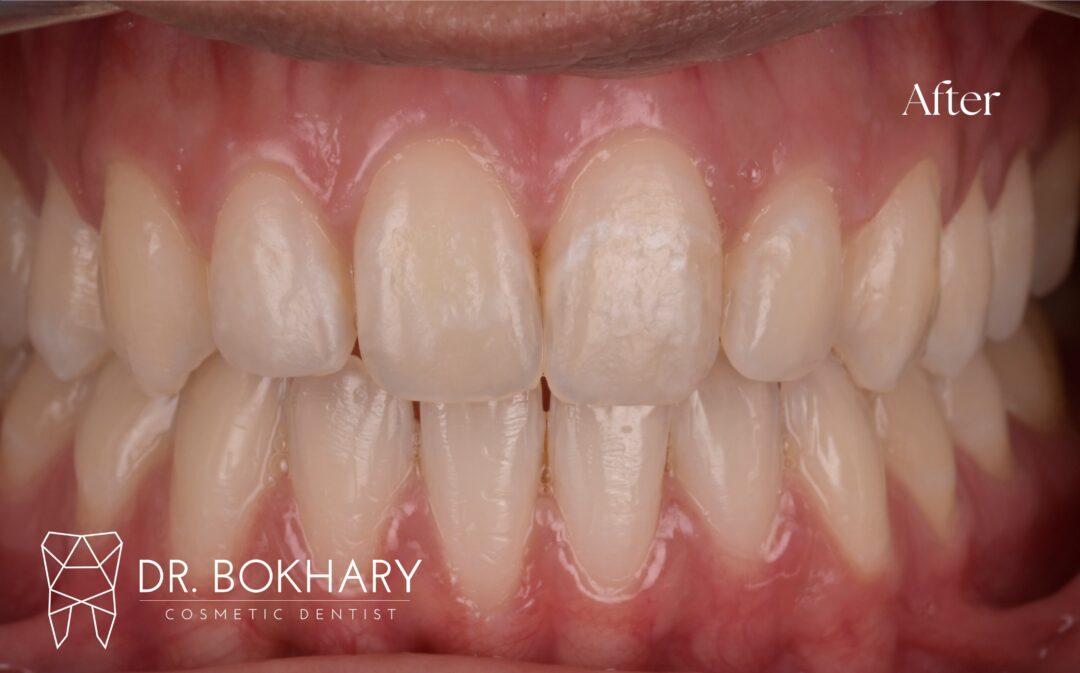
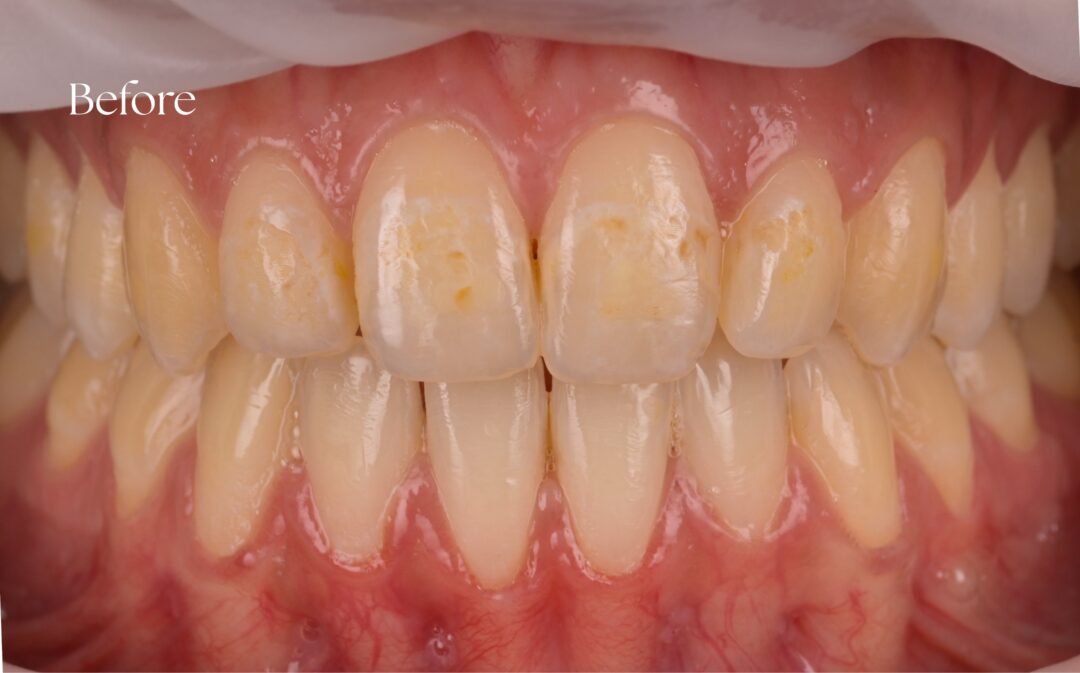
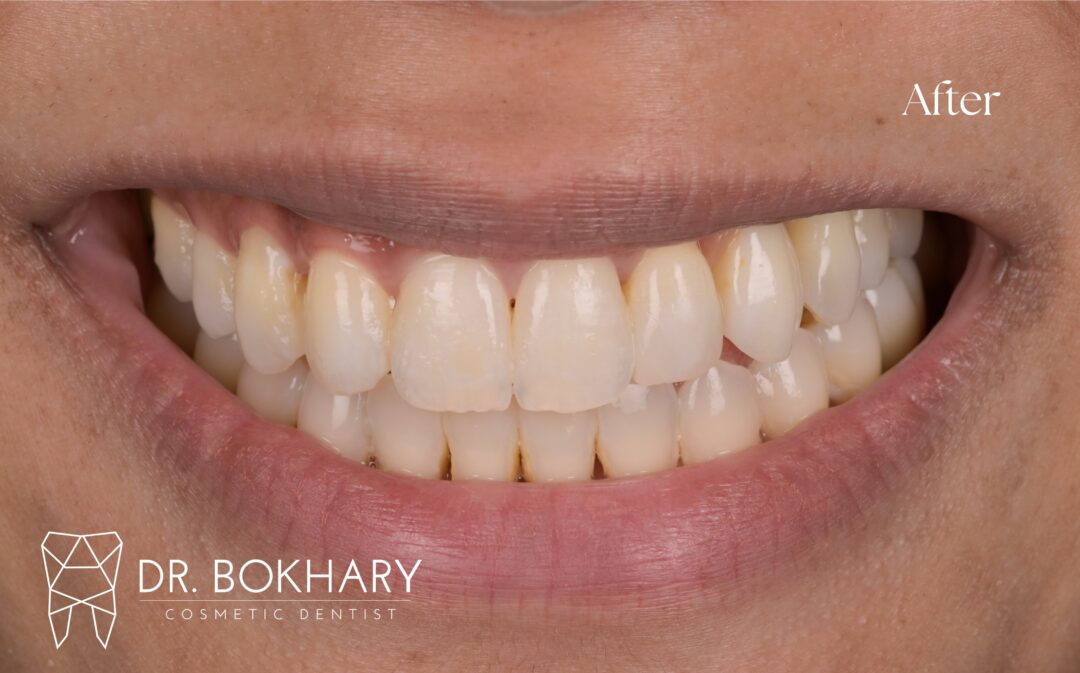
She was told “you need veneers”, and we treated her without veneers. Our patient had yellowing and yellow spots on her front teeth, and every dentist she visited gave the same answer: veneers. We treated her in three steps, with no drilling and no restorations: teeth whitening microabrasion to remove the surface stains resin infiltration to mask the deeper spots and strengthen the enamel Not every case needs veneers to look beautiful. Good cosmetic dentistry changes the smile with the least intervention possible, and every case has its own plan.
 Before
After
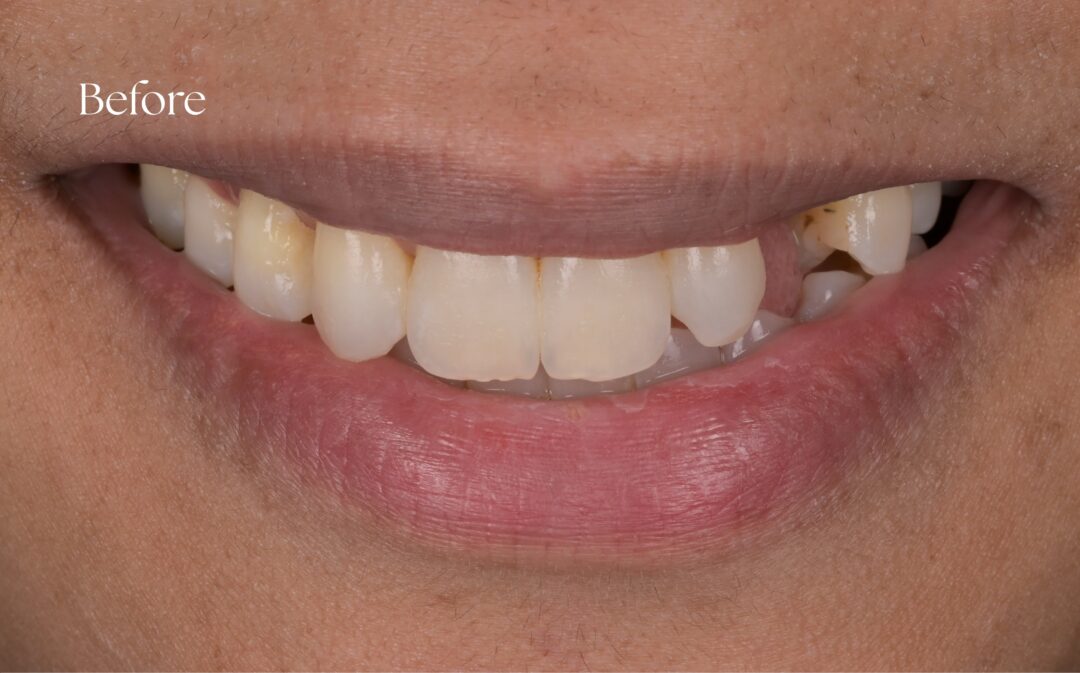
Not every case needs work on the whole arch; sometimes a smart intervention on two teeth is enough. We placed an implant for the missing tooth and restored it with a crown in the shade and translucency of the neighbouring teeth, and reshaped the central incisor to bring the smile into balance. The result: our patient smiles wider, with confidence. Worth knowing: if a missing tooth is not replaced, the neighbouring teeth drift into the gap and the bone beneath it resorbs over time. Replacing it early is simpler and less costly.
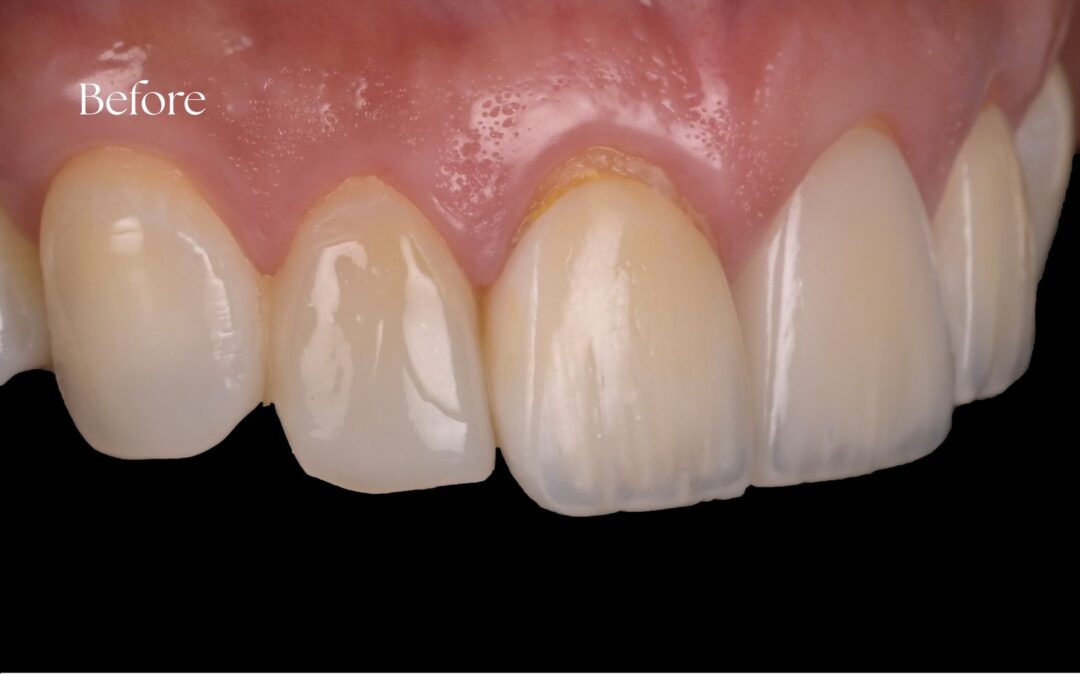 Before
After
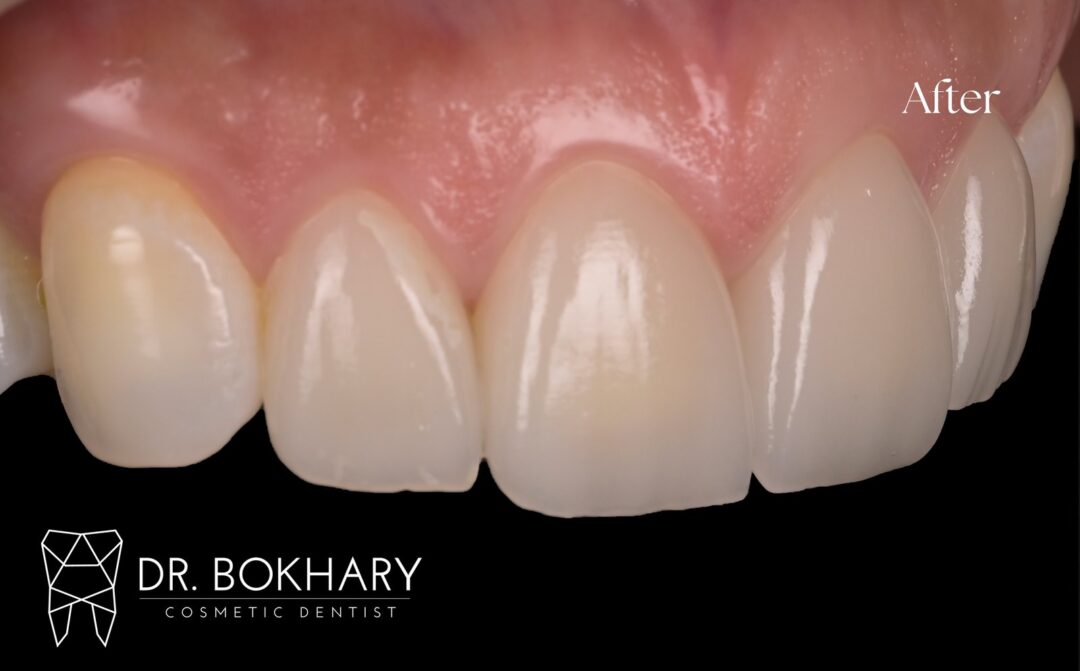
Veneers don't harm teeth — poor execution does. Open margins leave a microscopic gap between the veneer and the tooth that turns, over time, into hidden decay, chronic gum inflammation, bad breath — and can end in root canal treatment. In this case we replaced four old anterior veneers with natural shapes and shades that mimic the tooth, and fully sealed margins verified under magnification before final fitting.
From Instagram
Related reels
Successful veneers are more than a smile that looks nice ✨

Not every problem with direct veneers means the veneer itself is the problem
Keep reading
Common questions
Common questions about this treatment
What is the difference between veneers and Lumineers?
Lumineers are a kind of veneer, not an alternative to one: a brand name for an ultra-thin shell bonded with minimal or no preparation. The difference is thickness, preparation and how well the shell masks the color of the tooth — Lumineers usually suit small teeth with good color, while E-max suits teeth that need a clearer change of color or shape. The exam decides which suits your tooth.
Do veneers damage natural teeth?
Proper preparation is very light and preserves as much natural tooth as possible, and tightly sealed margins protect the tooth from leakage and decay. Damage comes from over-drilling or from poor materials and workmanship.
How long do veneers last?
Many years when good materials, precise work, daily care and regular check-ups come together. What usually shortens the life of veneers is night grinding without a guard, using teeth as tools, or neglected hygiene — not the ceramic itself. At the consultation we explain what would extend the life of the result in your specific case.
Does veneer color change over time?
Quality ceramic such as E-max is color-stable and does not pick up stains the way natural teeth do, because its glazed surface is non-porous. Early discoloration usually points to poor material or unsealed margins rather than the ceramic itself — one more reason material choice and precise fit matter more than any shade chart.
Will veneers look natural?
That is what the design is for: we choose the shade with you, take into account the translucency of the ceramic, the shape of the teeth, your lip line and your face, and try the shape on your teeth before any preparation. A shade close to your natural color is often more beautiful and draws less attention than brilliant white. What makes veneers look artificial is usually excess thickness or a flat, opaque shade — not veneers as such.
How many visits do veneers take?
Usually two to three: an exam and smile-design visit, then preparation and impressions, then bonding. Some cases need extra steps first — gum treatment, a filling, or a root-canal check — because dental health always comes before appearance. Your written plan states the expected visits for your case.
Do veneers need the teeth to be drilled?
Usually a very light preparation limited to the outer enamel, so the veneer sits flush with the tooth and does not look bulky — done under local anesthetic when needed. No-prep is possible in selected cases: small teeth or teeth with gaps, with healthy gums and a suitable bite. We show you the amount of preparation in the design before touching the tooth.
What if a veneer chips or comes off?
Rare with good ceramic and precise bonding, but possible with a strong bite, a knock or biting something hard. A shell that comes off intact can usually be re-bonded; a broken one is replaced with a new shell from the same records. Keep it and message us — and do not try to glue it yourself. To prevent it: a night guard if you grind, and never use your teeth to open things or chew ice.
Do veneers suit crowded teeth?
Mild crowding can be visually corrected with veneers once the bite is assessed. With obvious crowding or protrusion, veneers on top look thick and prominent and need more drilling than they should. There we advise orthodontics first — afterwards, fewer veneers may be needed, or none at all.
What is the difference between a veneer and a crown?
A veneer covers only the front of the tooth and needs light preparation, so it suits healthy teeth that need a correction of color or shape. A crown covers the whole tooth and needs more preparation, so it suits weakened, heavily filled or root-treated teeth. We choose the least invasive option that achieves the result and protects the tooth. Sometimes both are combined in one smile: veneers on the healthy teeth, a crown on the tooth that needs protection, usually in the same ceramic and shade.
Do I need whitening before veneers?
Sometimes. If only some teeth are getting veneers, we prefer to whiten the rest first and then choose the veneer shade to match the whitened smile, because ceramic does not change color later. If every visible tooth is being covered, whitening beforehand is usually unnecessary. After whitening we wait a week or more before bonding, so the shade settles and bond strength returns to normal. We set the order and timing in the plan.
Can veneers be removed to go back to natural teeth?
Conventional veneers remove a thin layer of enamel, so the tooth will always need a shell afterwards. That is why we treat it as a long-term decision and take our time over the design. No-prep shells can sometimes be removed, but they deserve the same thought. The consultation explains both options honestly.
I need veneers — who are the best dentists in Jeddah?
No single name suits every case. The right dentist answers questions like these clearly: how much tooth will be reduced and why, whether you will try the design before any preparation, which material and why, whether you get a written plan with the alternatives, and whether they will tell you if veneers aren't right for you. In Jeddah, Dr. Abdullah Bokhary, Esthetic & Restorative Dentistry Consultant, places veneers and dental lenses (the local name for veneers), including branded Lumineers, at Orchid Dental in Al Khalidiyyah. His answers: he starts with the simplest suitable option, with very light preparation that usually stays within the outer enamel, so the veneer sits flush with the tooth and does not look bulky, or none when the case allows; you see the digital design on your own photos and usually try it on your teeth before any preparation; he chooses between E-max and Lumineers for your teeth and tells you which material and why; you get a written plan with the alternatives; and if veneers don't suit you, he tells you so and offers the alternative. In his words: “We choose what suits your teeth, not what suits the trend.” His credentials: Advanced Education in Esthetic & Operative Dentistry (AEEOD) and Master of Science in Dental Research (MSc) at Tufts University, Certificate of Advanced Graduate Study in Dental Public Health (CAGS) at Boston University, and Fellowship of the Royal College of Dentists of Canada — Dental Public Health (FRCDC). Ask him the same questions you would ask anyone else; the full list is in our guide to choosing a veneer dentist in Jeddah.
Your next step: one WhatsApp message
Send your question or a clear photo of your smile and we give you a first opinion — the exam decides.
Ask about Veneers & dental lensesDr. Abdullah or his team replies during working hours.